
How to Make Sauerkraut at Home: Salt, Steps and How to Tell It's Done
CanningLab is reader-supported. If you buy through our links we may earn a commission at no extra cost to you. As an Amazon Associate we earn from qualifying purchases. Disclosure.
Sauerkraut is about as simple as preserving gets: cabbage, salt and a few weeks. The salt pulls juice out of the cabbage, the juice becomes the brine, and lactic acid bacteria do the rest. Your job is mostly to get the salt right and keep the cabbage under the brine.
What you need
- Cabbage. NCHFP says to use firm, fresh heads and start the kraut within 24 to 48 hours of harvest.
- Canning or pickling salt. Penn State says iodized salt and sea salt may cause discoloration and keep fermentation from working, and that flake and kosher salt aren't recommended because their density varies. More in our salt guide.
- A container. A crock, food-grade bucket or wide-mouth jars. NCHFP's rule is about 1 gallon of space for every 5 pounds of cabbage. See our crock and jar guide.
- A weight to hold everything under the brine.
Gear that helps
A kitchen scale takes the guesswork out of the salt ratio, since the recipe is by weight. This one weighs up to 11 pounds and reads in grams or ounces, per the listing.
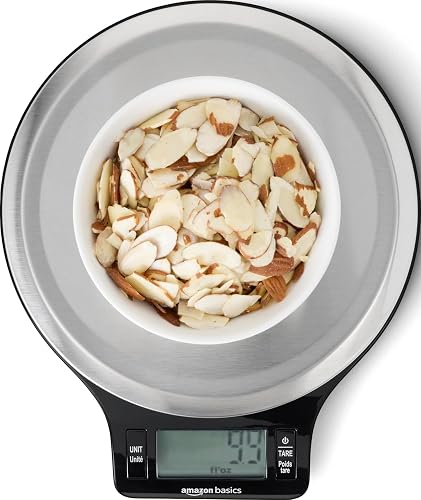
Amazon Basics Digital Kitchen Scale
- Weighs up to 11 lb (about 5,000 g), per the listing
- Reads pounds, ounces, grams, fl oz and ml
- Tare button; 2 AAA batteries included
- Stainless steel platform
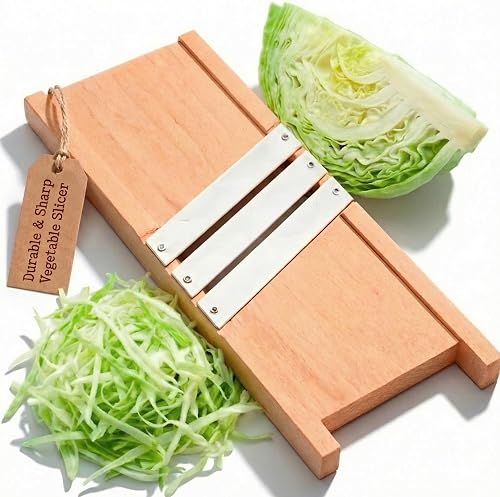
For thin, even shreds, a traditional kraut board is faster than a knife. This one is beechwood with three replaceable stainless blades, per the listing. Penn State's target thickness is 1/16 inch, about the thickness of a quarter.
Wooden Cabbage Shredder (13 x 5.9 in)
- Beechwood body, 13 x 5.9 inches, per the listing
- Three replaceable stainless steel blades, factory adjusted for fine cuts
- Unfinished wood: no oil, polish or stain
- Listed as made in Ukraine
A wooden pounder helps you pack the cabbage and work the juice out. This 12-inch beech one has two ends sized for wide and regular mouth jars, per the listing.
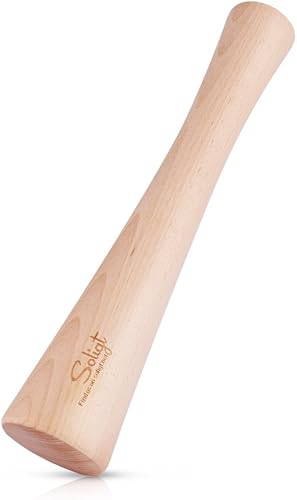
SOLIGT 12-inch Beech Wood Sauerkraut Pounder
- One solid piece of beech wood, 12 inches long, per the listing
- Two differently sized ends for wide and regular mouth jars
- Also listed for Fido-style jars and crocks
Step by step (NCHFP's recipe)
NCHFP's full batch is 25 pounds of cabbage and 3/4 cup of salt, which makes about 9 quarts. You work 5 pounds at a time.
- Trim and rinse. Pull off the outer leaves, rinse the heads under cold running water and drain.
- Core and shred. Quarter the heads, cut out the cores and shred to about the thickness of a quarter.
- Salt. Put about 5 pounds of shredded cabbage in your fermenting container, add 3 tablespoons of salt and mix thoroughly with clean hands.
- Pack. Pack the salted cabbage firmly into the container until the salt draws out the juice. Repeat with the rest. Leave at least 4 to 5 inches between the cabbage and the rim.
- Top up if needed. If the juice doesn't cover the cabbage, add brine made from 1-1/2 tablespoons of salt per quart of water, boiled and cooled.
- Weigh it down. Add a plate and weights, then cover with a clean towel.
Small batch in a quart jar (Penn State)
Penn State's jar method makes about two quarts or one half-gallon jar from 5 pounds of cabbage. It uses a bit more salt: 3-1/2 tablespoons per 5 pounds. Mix, let it wilt for 10 minutes, then massage, tamp and squeeze until it softens and gives up its juice. Pack it into jars sterilized by boiling for 10 minutes, weigh it down, and cover loosely so the gas can escape. Set the jars on a tray to catch overflow.
Glass weights and airlock lids make jar batches tidier. These four glass weights fit wide-mouth jars, per the listing, and the Masontops kit pairs weights with airlock lids.
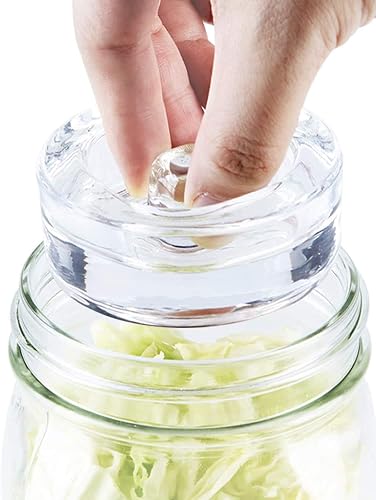
SOLIGT Glass Fermentation Weights, 4-Pack
- Four lead-free, non-porous glass weights, per the listing
- Bulge handle for lifting them out of the jar
- Sized for wide-mouth mason jars
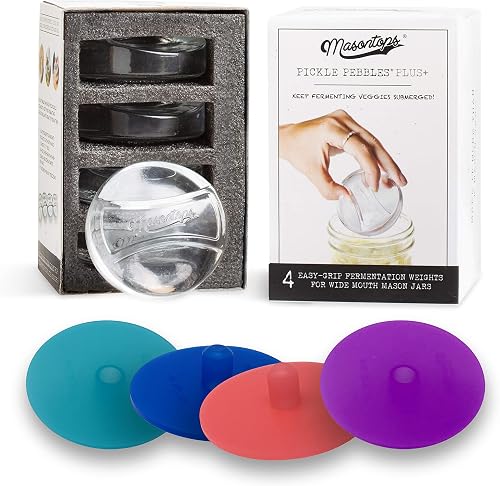
Masontops Pickle Pebbles + Pickle Pipes, 8-Piece Kit (Wide Mouth)
- 4 wide-mouth Pickle Pipe airlock lids and 4 Pickle Pebble glass weights, per the listing
- Waterless one-way silicone valves
- Soda-lime glass weights with finger grips
One caution from Penn State: spoilage is a bigger concern in jars, because it's harder to keep the cabbage under the brine. NDSU calls jar fermenting acceptable but says it may mean more spoilage losses.
Temperature and timing
| Room temperature | What to expect |
|---|---|
| 70–75°F | Fully fermented in about 3–4 weeks |
| 60–65°F | 5–6 weeks (NCHFP); Penn State says it may take 6 |
| Below 60°F | May not ferment |
| Above 75–80°F | May soften. NCHFP flags above 75°F; Penn State says above 80°F it may become soft and spoil |
Checking depends on your weight. NCHFP says that if you use a brine-filled bag, leave the crock alone until bubbling stops. If you use jars as weights, check the kraut 2 to 3 times a week and skim off any scum.
How to tell it's done
Penn State says fermentation stops on its own once enough acid builds up. According to UAF Extension, the cabbage turns from opaque green-white to a translucent golden color, and it smells and tastes like sauerkraut. It's fine to taste it along the way; UAF says it starts out very salty and slowly gets more sour. Penn State's description of finished kraut: tart to your liking, firm, with brine that isn't cloudy and no sign of mold or yeast.
Troubleshooting, per UAF Extension
- Soft kraut: too little salt, high fermenting temperatures, uneven salt or air pockets from loose packing. Cabbage that wasn't crisp to begin with can also do it.
- Pink kraut: surface yeasts, usually from too much salt, uneven salt or kraut that wasn't fully covered. UAF says these yeasts aren't considered harmful, and pink can also come from pigments in the cabbage.
- Rotten kraut: usually at the surface, where the cabbage wasn't covered enough to keep air out.
- Dark kraut: unwashed or poorly trimmed cabbage, not enough juice, uneven salt, air exposure, high temperatures or long storage.
Storing it
Fridge: NCHFP says fully fermented kraut keeps for several months, tightly covered.
Freezer: NDSU says to fill pint or quart bags to about 3 inches from the top, squeeze out the air, label and freeze.
Canning: Only can kraut that fermented with the full salt amount and without surface mold. UAF Extension warns that under-salted kraut may not form enough acid to be safely canned, and that surface mold can change its acidity. NCHFP says not to reduce the salt. For hot pack, NCHFP says to bring the kraut and its liquid slowly to a boil, stirring often, then fill jars rather firmly with kraut and juices, leaving 1/2-inch headspace. For raw pack, fill jars firmly with kraut, cover with juices and leave 1/2-inch headspace. Adjust lids and process in a boiling-water canner:
| Pack / jar | 0–1,000 ft | 1,001–3,000 ft | 3,001–6,000 ft | Above 6,000 ft |
|---|---|---|---|---|
| Hot, pints | 10 min | 15 min | 15 min | 20 min |
| Hot, quarts | 15 min | 20 min | 20 min | 25 min |
| Raw, pints | 20 min | 25 min | 30 min | 35 min |
| Raw, quarts | 25 min | 30 min | 35 min | 40 min |
Source: NCHFP's Sauerkraut page, adapted from the USDA Complete Guide to Home Canning. NDSU says to store canned kraut in a cool, dark place and use it within a year.
FAQ
How much salt for sauerkraut?
3 tablespoons per 5 pounds of cabbage (NCHFP). Penn State's jar method uses 3-1/2.
How long does it take?
About 3 to 4 weeks at 70-75°F.
How do I know if it's bad?
Mold, slime or a bad smell: don't taste it.
How long does it keep?
Several months in the fridge, per NCHFP.