
Canning Salt, Citric Acid, Vinegar and Pickle Crisp: What to Use
CanningLab is reader-supported. If you buy through our links we may earn a commission at no extra cost to you. As an Amazon Associate we earn from qualifying purchases. Disclosure.
Salt
NCHFP recommends canning or pickling salt. Table salt is safe, iodized or not, but its anti-caking additives can make the brine cloudy, and NCHFP lists iodized salt as one cause of darkened pickles. Flake salt varies in density and isn't recommended.
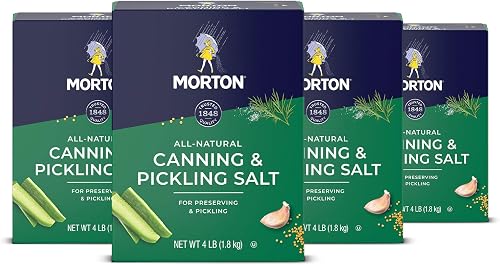
Morton Canning & Pickling Salt, 4 lb (4-Pack)
- Salt sold for canning, pickling, marinating and brining, per the listing
- Four 4-lb boxes
Acid: citric acid and bottled lemon juice
Tomatoes need added acid every time: 1 tablespoon bottled lemon juice or 1/4 teaspoon citric acid per pint, double for quarts, per NCHFP. See canning tomatoes for the full steps.
Why bottled? Iowa State Extension explains that bottled lemon juice is standardized for acidity under FDA rules, while fresh lemon juice varies with variety, ripeness and growing conditions. NCHFP's salsa guidance adds: use only commercially bottled lemon juice, and you can swap lemon juice for vinegar, but not vinegar for lemon juice.
Mrs. Wages' citric acid label gives the same tomato amounts as NCHFP (1/4 teaspoon per pint, 1/2 per quart), per the listing.
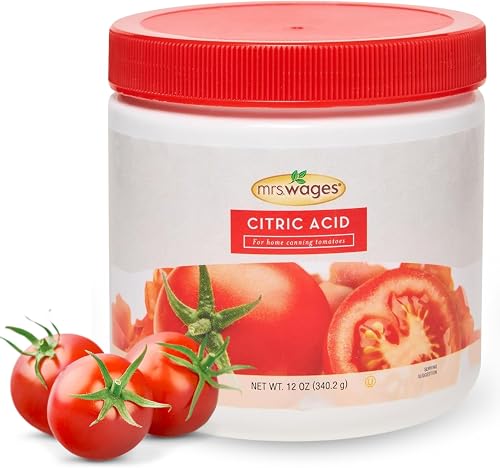
Mrs. Wages Citric Acid, 12 oz
- Label directions: 1/4 teaspoon per pint or 1/2 teaspoon per quart of tomatoes, per the listing
- 12 oz jar; kosher
Vinegar
NCHFP recommends white distilled or cider vinegar of 5% acidity (50 grain) for pickling, and says not to change the vinegar, food or water proportions or use vinegar of unknown acidity. A minimum, even level of acid throughout the product is what prevents botulism. Weak vinegar can also cause soft or slippery pickles.
Firming agents
- Pickle Crisp (calcium chloride): Utah State Extension describes Ball Pickle Crisp as food-grade calcium chloride that supplies calcium to firm pickles without lowering acidity, and says to follow the maker's directions. The listing says the granules dissolve in the brine with no overnight lime soak.
- Lime: NCHFP says food-grade lime improves firmness, but excess lime must be removed for safety: drain, rinse and resoak in fresh water for an hour, three times. Don't use aluminum pans with lime, per NCHFP's FAQ.
- Alum: NCHFP calls it unnecessary and says it doesn't firm quick-process pickles.
- No additives: for cucumber pickles whose tested recipe calls for it, NCHFP's low-temperature pasteurization (jars held in 180–185°F water for 30 minutes, checked with a thermometer, never below 180°F) improves firmness. NCHFP's caution: use it only when the recipe indicates. Trimming 1/16 inch off the blossom end of cucumbers also helps.
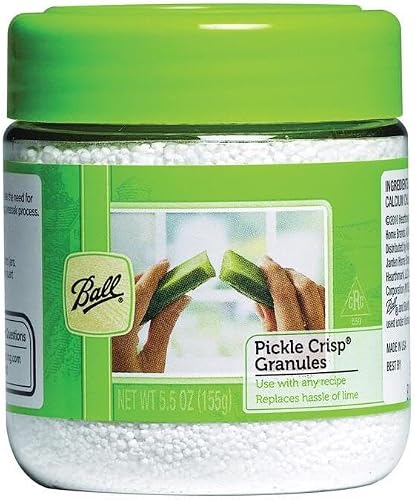
Ball Pickle Crisp Granules, 5.5 oz
- Calcium chloride granules that dissolve in pickle brine, per the listing
- No overnight lime soak or repeated rinsing, per the listing
Mrs. Wages Xtra Crunch is listed for use with Mrs. Wages Quick Process pickle recipes.
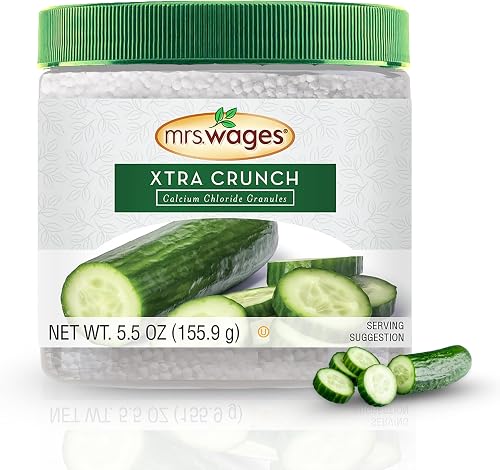
Mrs. Wages Xtra Crunch, 5.5 oz
- For use with Mrs. Wages Quick Process pickling recipes, per the listing
- Label usage per the listing: 1/4 tsp per quart, 1/8 tsp per pint
Sources
- NCHFP: Salts used in pickling
- NCHFP: General information on pickling
- NCHFP: Problems with pickled foods
- NCHFP: Tomato acidification directions
- NCHFP: Ingredients for salsa recipes
- Iowa State Extension AnswerLine: The case for bottled lemon juice
- NCHFP: Low-temperature pasteurization treatment
- NCHFP: Pickling FAQs
- Utah State Extension: Getting crisp home pickled vegetables