
Canning Lids: Single-Use, Bulk and Reusable Options
CanningLab is reader-supported. If you buy through our links we may earn a commission at no extra cost to you. As an Amazon Associate we earn from qualifying purchases. Disclosure.
The lid is the cheap part of a canning jar, and it's the part that does the sealing. Standard lids are a two-piece system: a flat metal lid with a ring of sealing compound, held on during processing by a screw band. When the jar cools, a vacuum pulls the lid down and the compound seals.
Why flat lids are single-use
NCHFP puts it plainly: “Lids should not be used a second time.” The first use leaves an indentation in the sealing compound, so it can't be trusted to seal again. The screw bands are different: reuse them unless they're badly rusted or the top edge is pried up. Ball says the same thing about its lids being single-use.
To heat or not to heat
This one changed. Older instructions said to preheat lids before use, and NCHFP's general text still mentions placing a preheated lid but tells you to follow the lid maker's directions. Ball's current advice is to skip preheating: wash lids in hot, soapy water, dry them, and use them at room temperature. Ball says the compound performs better that way, and that preheating can reduce vacuum in water bath canning and cause buckling in pressure canning. Bottom line: follow whatever the box says.
Buy a year at a time
NCHFP says unused lids work well for at least 5 years from manufacture, so there's no need to hoard. Toss old, dented or deformed lids.
Ball lids
Match the lid to the jar mouth. These bulk packs are lids only (no bands), per the titles.
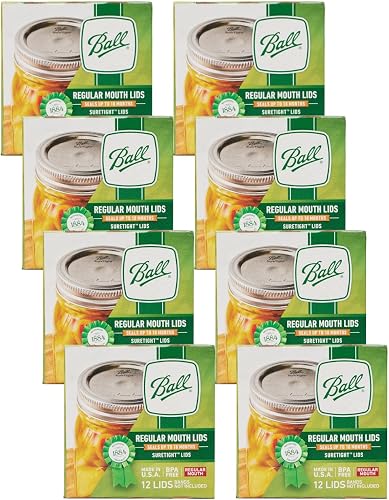
Ball Regular Mouth Canning Lids, 96 Count (8 Packs of 12)
- Fits regular mouth mason jars
- 96 lids total; lids only (no bands), per the title
Ball Wide Mouth Canning Lids, 48 Count (4 Packs of 12)
- Fits wide mouth mason jars
- 48 lids total
FORJARS: a bulk alternative
FORJARS sells 100-packs of steel lids with silicone seals, sized 2.7 inches for regular mouth and 3.4 inches for wide mouth, and made to fit Ball jars, per the listings. As with any lid, follow the maker's prep instructions.
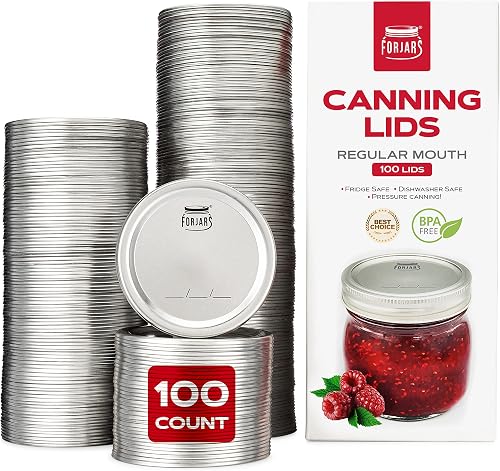
FORJARS Regular Mouth Canning Lids, 100-Pack
- 2.7-inch steel lids with silicone seals, per the listing
- Made to fit Ball regular mouth jars
- Rustproof food-grade metal, per FORJARS
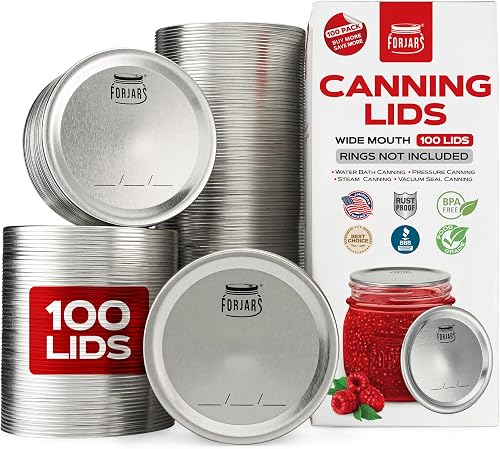
FORJARS Wide Mouth Canning Lids, 100-Pack
- 3.4-inch metal lids with silicone seals, per the listing
- Made to fit Ball wide mouth jars
- Rustproof food-grade metal, per FORJARS
Reusable lids: Tattler
Tattler lids are plastic lids with separate rubber rings, sold as reusable and listed for both water bath and pressure canning, per the listing. Here's the honest part: we couldn't find a published NCHFP recommendation for or against reusable lids. Its projects page mentions lab research comparing lid systems, but no result is posted on that page. If you try them, follow Tattler's own instructions exactly, since they work differently from metal lids.
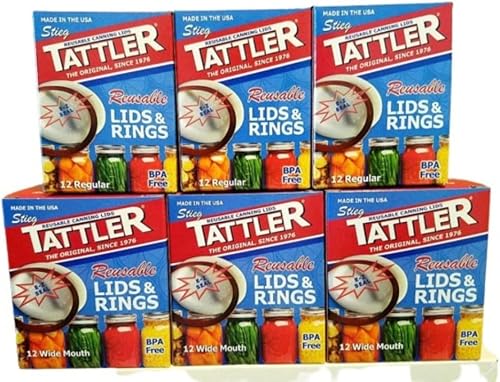
Tattler E-Z Seal Reusable Canning Lids, 3 Dozen Regular + 3 Dozen Wide
- Plastic lids with separate rubber rings; sold as reusable, per the listing
- Listed for water bath and pressure canning
- BPA-free, made in the USA, dishwasher safe, per the listing
Bands and storage lids
Bands get reused, so it's worth having enough. NCHFP says they can be reused unless they're badly rusted or the top edge is pried up. This set is food-grade 304 stainless for regular-mouth jars, per the listing.
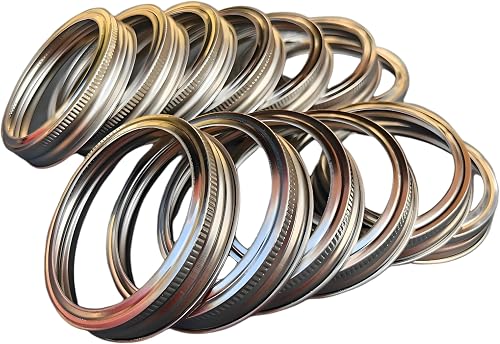
Stainless Steel Mason Jar Bands, Regular Mouth (12)
- 12 food-grade 304 stainless bands for regular-mouth jars (2-3/8 in. inside diameter), per the listing
- Dishwasher safe; bands only, no lids
Once a jar is opened (or for everyday fridge and pantry storage), plastic storage lids are one piece. Ball lists its plastic lids for storage after canning and everyday organization; Masontops' Tough Tops add a silicone gasket, per the listing.
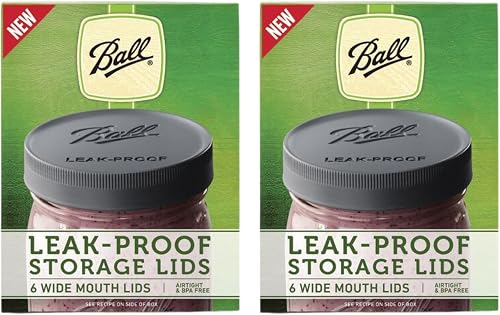
Ball Leak-Proof Plastic Storage Lids, Wide Mouth (12)
- Reusable plastic lids for wide-mouth jars, per the listing
- Listed for storage after canning or for everyday organization
- 12 lids (2 packs of 6)
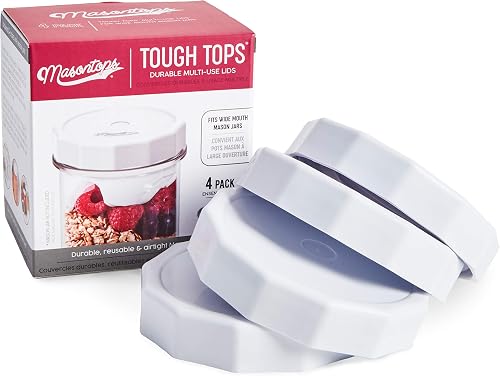
Masontops Tough Tops Plastic Lids, Wide Mouth
- Plastic storage lids with silicone gaskets, per the listing
- BPA- and phthalate-free, per Masontops
- Faceted sides for grip
Checking seals
After 12 to 24 hours of cooling, NCHFP gives three ways to check: press the center of the lid, tap it with a spoon, or look across it to see that it's slightly concave. Then take the bands off, wash and dry the jars, and store them. Storing without bands makes a failed seal easier to spot. Don't retighten lids after processing.
FAQ
Can you reuse canning lids?
Not standard flat lids. Bands, yes.
Should I heat lids first?
Not Ball lids, according to Ball's current guidance. Follow the instructions on your lid box.
How long do unused lids last?
At least 5 years from manufacture, per NCHFP.