
How Long Do Canned Goods Last? Home-Canned and Store-Bought
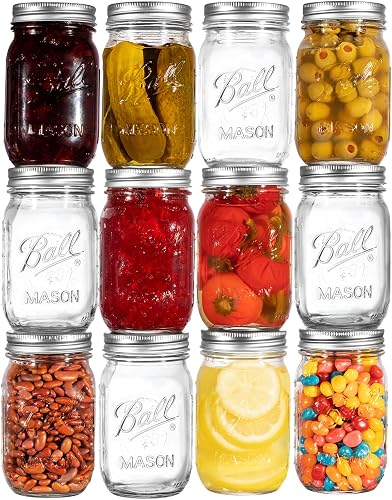
Home-canned food
NCHFP says properly canned food kept in a cool, dry place holds its best eating quality for at least a year, and suggests canning no more than you'll use within a year. FSIS's storage chart lists 12 months for home-canned foods.
Ball's half-pint jar listing gives the same 1-year figure. Ball's website says up to 18 months with its SureTight lids, a manufacturer claim that goes beyond NCHFP's 1-year quality guidance.
Store it right
- Temperature: 50 to 70°F is best, per NCHFP. Never above 95°F.
- Avoid: hot pipes, the stove, a furnace, an uninsulated attic, and direct sunlight.
- Keep it dry. Dampness can corrode lids and break seals.
- Take the bands off, wash and dry the jars, then store. A broken seal is easier to spot without the band.
- Don't stack too high. NCHFP cites one manufacturer recommending no more than two layers.
Store-bought canned goods
FSIS's chart for commercially canned foods:
| Type | Examples | Best quality |
|---|---|---|
| High-acid | Tomatoes, fruit | 12–18 months |
| Low-acid | Meat, poultry, fish, most vegetables | 2–5 years |
| Home-canned | Anything you put up yourself | 12 months |
FSIS recommends storing canned goods somewhere cool and dry, ideally below 85°F.
Signs it's gone bad
NCHFP's warning signs for home-canned food:
- A swollen lid or broken seal
- Streaks of dried food running from the top of the jar
- Rising bubbles or unnatural color
- Liquid that spurts when you open it
- An off smell, or cotton-like mold
FSIS adds: never use food from leaking, bulging or badly dented cans, cracked jars, or jars with loose or bulging lids. As FSIS puts it: “Don't even taste the food!”
Buckled lids and jars that didn't seal
If you find a buckled lid on a jar in storage, NCHFP says to assume the food has spoiled and throw it out. For low-acid foods and tomatoes, follow the handling steps above: bag it if it's still sealed, detoxify it if it's unsealed or leaking.
Jars that don't seal right after processing are different. If you find an unsealed jar within 24 hours, NCHFP says you can refrigerate it and use it within a week, or freeze it (adjust headspace to 1 inch). Reprocessing isn't recommended because of quality loss; if you do it, it must be within 24 hours, after a tested recipe, as the tested hot pack with a new lid. If you didn't follow a tested recipe, NCHFP says all the jars may be unsafe and should be discarded.
FAQ
Is the 1-year mark a safety deadline?
NCHFP frames it as the window for “optimum eating quality.” Whatever the age, if a jar shows any of the spoilage signs above, don't taste it.
How long do store-bought cans last?
Plan on 12 months for high-acid foods and 2 years for low-acid foods. They've been known to last longer: FSIS gives up to 18 months and 5 years.