
Canning Green Beans: The Pressure Canning Method
What you need
- A pressure canner (dial or weighted gauge) that holds at least 4 quart jars
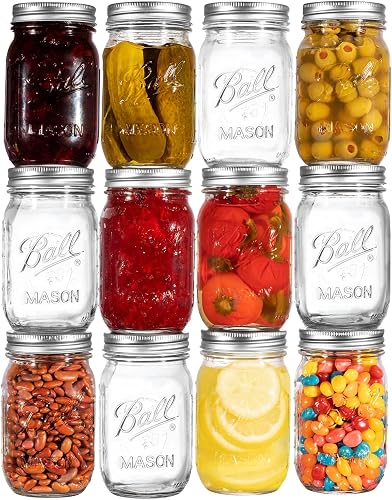
- Pint or quart jars, new lids and bands
- About 14 pounds of beans for 7 quarts, or 9 pounds for 9 pints (NCHFP's average)
- Canning salt (optional)
Pick filled-out but tender, crisp pods. Toss any that are diseased or rusty, per NCHFP.
Steps
- Prep. Wash the beans and trim the ends. Leave them whole or cut or snap them into 1-inch pieces.
- Pack, one of two ways:
- Hot pack: cover beans with boiling water and boil 5 minutes. Fill jars loosely with beans, add 1 teaspoon of canning salt per quart if you want, then cover with the hot cooking liquid, leaving 1-inch headspace.
- Raw pack: fill jars tightly with raw beans, add salt if you want, then add boiling water, leaving 1-inch headspace.
- Lids on. Wipe the rims and put on lids and bands.
- Vent the canner for 10 minutes once steam flows steadily, then close the petcock or add the weight.
- Process at the pressure and time for your elevation (tables below). Start timing when you reach pressure. If pressure dips below target, bring it back up and restart the time.
- Cool down naturally. Turn off the heat and let the canner depressurize on its own. Then remove the weight or open the petcock, wait 10 minutes, and open the lid away from you.
- Cool jars undisturbed for 12 to 24 hours, then check seals.
Processing times and pressures (hot or raw pack)
Dial-gauge pressure canner
| Jar | Time | 0–2,000 ft | 2,001–4,000 ft | 4,001–6,000 ft | 6,001–8,000 ft |
|---|---|---|---|---|---|
| Pints | 20 min | 11 lb | 12 lb | 13 lb | 14 lb |
| Quarts | 25 min | 11 lb | 12 lb | 13 lb | 14 lb |
Weighted-gauge pressure canner
| Jar | Time | 0–1,000 ft | Above 1,000 ft |
|---|---|---|---|
| Pints | 20 min | 10 lb | 15 lb |
| Quarts | 25 min | 10 lb | 15 lb |
Source: NCHFP, adapted from the USDA Complete Guide to Home Canning. Not sure of your elevation? NCHFP has a lookup tool linked from its canning pages.
Common questions
Hot pack or raw pack?
Both use the same times, per NCHFP. Raw pack skips the 5-minute boil; hot pack includes it.
Do I need to add salt?
No. NCHFP lists it as optional.
What if a jar doesn't seal?
NCHFP says that if you find an unsealed jar within 24 hours, you can refrigerate it and use it within a week, or freeze it (adjust headspace to 1 inch). Reprocessing isn't recommended because of quality loss; if you do it, it must be within 24 hours, you must have followed a tested recipe, and you reprocess as the tested hot pack with a new lid. If you didn't follow a tested recipe, NCHFP says all the jars may be unsafe and should be discarded.