
Vacuum Sealing Mason Jars: What It's Good For (and What It Isn't)
CanningLab is reader-supported. If you buy through our links we may earn a commission at no extra cost to you. As an Amazon Associate we earn from qualifying purchases. Disclosure.
Mason jars plus a vacuum is a nice way to keep pantry food fresher for longer. You put a lid on the jar, pull the air out, and the lid holds down by vacuum. No heat involved, which is exactly why it's a storage method and not a preservation method on its own.
What it's good for
- Dehydrated food. NCHFP lists vacuum packaging as “a good option” for storing dried foods. Pair this with a dehydrator.
- Nuts. NCHFP no longer recommends canning dry-packed nuts and points to small appliances that vacuum-seal them for room or freezer storage instead.
- Crackers and other dry foods. Oregon State Extension notes vacuum packaging helps keep quality in dry foods such as nuts and crackers.
Three ways to do it
1. A jar sealer attachment on your vacuum sealer
If your vacuum sealer has an accessory port (the FoodSaver FM2100 and Anova Pro do, per their listings), you can add jar sealer caps. FoodSaver's kit includes one regular-mouth and one wide-mouth jar sealer and a hose, per the listing.
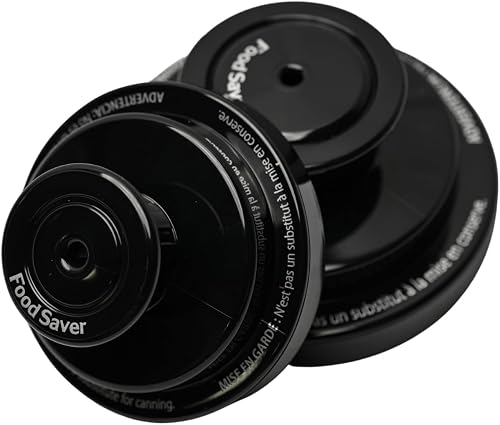
FoodSaver Regular and Wide-Mouth Jar Sealer Kit
- One regular and one wide-mouth jar sealer plus accessory hose, per the listing
- Connects to a FoodSaver sealer’s accessory port
- BPA-free
2. A cordless jar sealer
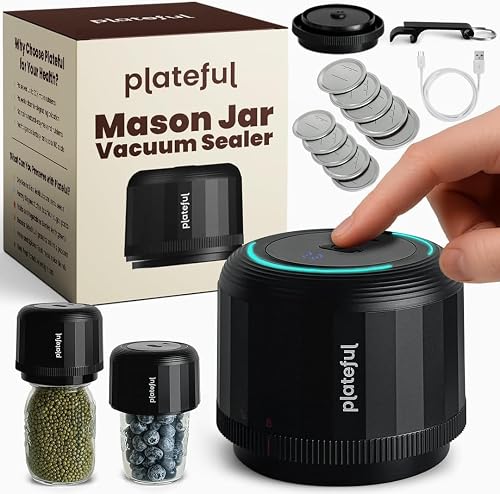
No vacuum sealer? A cordless handheld pump does just jars. Plateful's VacuFresh is rechargeable and fits regular (2.68-inch) and wide (3.27-inch) mouths, with 10 vacuum lids included, per the listing.
Plateful VacuFresh Cordless Mason Jar Vacuum Sealer
- Fits regular (2.68 in.) and wide mouth (3.27 in.) jars, per the listing
- Rechargeable battery; one-touch operation
- 10 vacuum lids included
This electric kit includes a wide-mouth sealer, a regular-mouth converter, and 5 lids of each size, with one-touch operation and auto pause, per the listing.
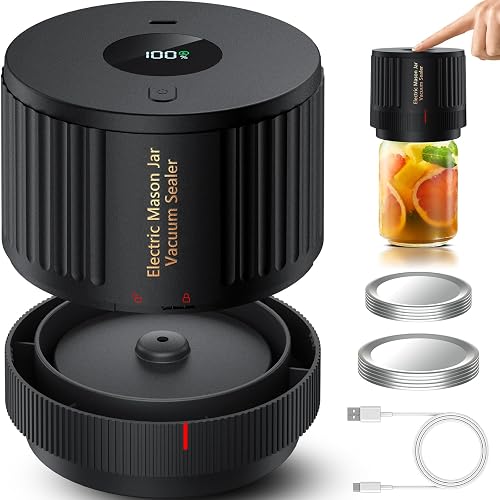
Electric Mason Jar Vacuum Sealer Kit
- Cordless handheld pump with wide-mouth sealer and regular-mouth converter, per the listing
- Includes 5 wide-mouth and 5 regular-mouth lids
- One-touch operation with auto pause
3. A chamber sealer built for jars
If you're sealing dozens of jars of dried food, Avid Armor's JARMAX fits 4 quart jars at a time in a 12-liter chamber, per the listing. More on these in our chamber sealer guide.
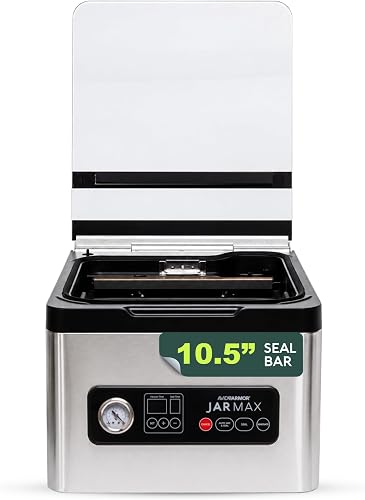
Avid Armor JARMAX Chamber Vacuum Sealer for Mason Jars
- 12 L chamber fits 4 quart jars or 6+ pint jars on a wire shelf, per the listing
- 10.5-inch twin-wire seal bar; seals Mylar pouches up to 7 mil
- Dry rocker pump with no oil changes
- Listing states it is not a canner and does not make fresh food shelf-stable
Tips
- Make sure food is fully dry before sealing it in a jar.
- Keep jars in a cool, dark, dry place. NCHFP's storage times for dried foods (4 months to a year depending on the food and temperature) still apply.
- Label jars with what's inside and the date.
- Check the seal before storing: the lid should stay down.
For thoroughly dried foods, NCHFP's “dry canning” post recommends a vacuum sealing machine with jar adapters (done at room temperature, without heating) or oxygen absorbers, instead of oven “dry canning.”