
Freeze Dryer vs Dehydrator: What University Extension Says
CanningLab is reader-supported. If you buy through our links we may earn a commission at no extra cost to you. As an Amazon Associate we earn from qualifying purchases. Disclosure.
Home freeze dryers have gotten a lot of attention, and the marketing numbers are big. Here's what university Extension services actually say, side by side with a regular dehydrator. Where a number comes only from a manufacturer, we say so.
How they work
Dehydrator: low heat and a fan. Iowa State Extension says a dehydrator removes 80 to 90% of the moisture in food.
Freeze dryer: food is frozen well below 0°F, then dried under vacuum, per Utah State Extension. Minnesota Extension says the main stage can remove up to 90% of the water and a second stage removes another 1 to 2%. The 98-99% figure you'll see is Harvest Right's own claim, as Iowa State Extension points out.
Side by side
| Dehydrator | Home freeze dryer | |
|---|---|---|
| Moisture removed | 80–90% (Iowa State) | Up to 90% + 1–2% more (Minnesota); 98–99% per the manufacturer |
| Shelf life (plan on) | About 4 months; known to last up to 1 year (Iowa State, NCHFP); jerky much shorter | Home freeze-dried: about 5 years; Utah State says not beyond 5–10 years |
| Texture | Shrinks, leathery; doesn't return to its natural state (Iowa State) | Rehydrates more fully, closer to fresh (Utah State) |
| Batch time | About 6 hours for thin apple slices to 36 hours for peach halves (Colorado State) | Typically 20–40 hours (Harvest Right figure cited by Utah State) |
| Energy | Lower | Often several times as much as dehydrating (Utah State) |
| Kills bacteria? | No kill step on its own for raw meat; USDA FSIS says to heat meat to 160°F (poultry 165°F) before dehydrating | No (Utah State, Minnesota) |
The shelf-life question
This is where the sources pull apart, so here's the full picture:
- Utah State's buying guide says no real data exists on the shelf life of home freeze-dried food, because home units have only been sold since 2013. It cites 8 to 10 years as a conservative safety estimate for commercial food in metal-Mylar pouches.
- Utah State's newer guide says freeze-dried foods can stay safe and stable for 10 to 15 years, sometimes up to 25, in airtight, moisture-proof packaging kept cool, dark and dry. But it doesn't recommend eating home freeze-dried food more than 5 to 10 years after processing, because quality and nutrients drop faster than in commercial product. It adds that vitamin C can decline significantly within 1 to 3 years.
- Iowa State says very little university research has been done on home freeze-drying, that there's no verification food will last 25 years, and that high-fat food goes rancid sooner and may last only a few years.
Food safety
What works and what doesn't
Minnesota Extension says home freeze dryers work well for fruits, vegetables, dairy and proteins, but not for foods high in fat or sugar, or baked goods. Utah State lists cooked meats, fruits, vegetables and starches as good candidates, and flags sausages, high-fat foods, high-sugar foods, dressings, alcohol and mayonnaise as difficult. It suggests keeping most pieces 1/4 to 1/2 inch thick and meat no thicker than about 3/4 inch.
Doneness: Utah State says the food should feel crisp, dry or brittle with no cold or soft spots. Minnesota suggests cutting a piece from each tray in half; a dark spot means moisture, and all the trays go back in.
Packaging matters for both
Utah State says thick Mylar bags (5 to 7 mil) without clear windows, with oxygen absorbers, give the best long-term protection, and that food should be packaged right after drying. Iowa State says to use an oxygen absorber, not a desiccant, and notes that Mylar bags with a clear side aren't airtight long term. Minnesota warns some general vacuum bags may let air and moisture through. The Wallaby bags below are 7.5 mil, per the listing; the quart bags' listing doesn't state a thickness. More in our mylar bag guide.
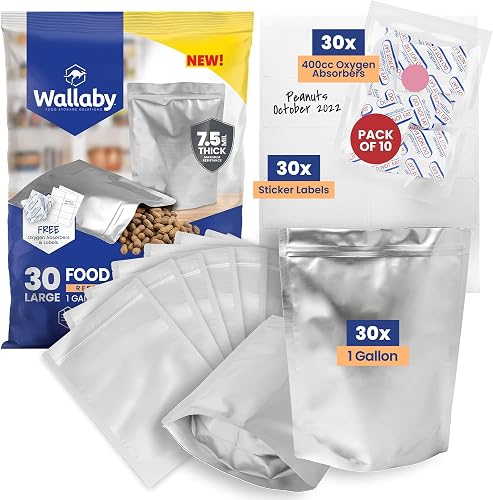
Wallaby 1-Gallon Mylar Bags with Oxygen Absorbers (30)
- 30 heat-sealable 1-gallon bags (7.5 mil), 30 oxygen absorbers (400cc) and labels, per the listing
- Resealable zipper; heat-seal above it for long-term storage
- Listing notes absorbers remove oxygen (about 1/5 of air), so bags won't shrink like vacuum bags
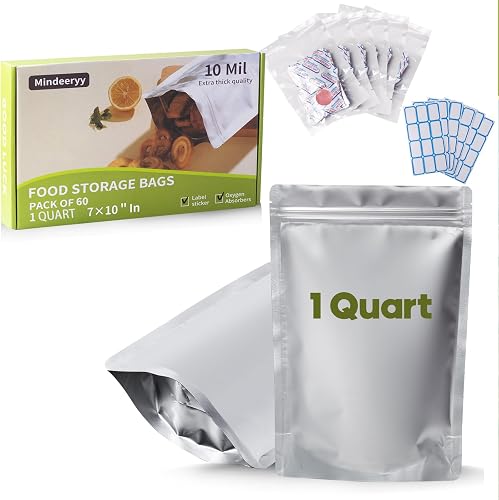
1-Quart Mylar Bags with Oxygen Absorbers (60)
- 60 zipper, heat-sealable 7 x 10 in. bags with 60 oxygen absorbers (400cc) and labels, per the listing
- PET/aluminum foil/PET layers
If a dehydrator fits your needs
If you're drying fruit and herbs to use within a few months (plan on about 4; NCHFP and Iowa State say dried foods have been known to last up to a year), a dehydrator may be all you need. Jerky is shorter: NCHFP says 2 weeks at room temperature, longer refrigerated or frozen. Our dehydrator guide compares models. Two ends of the range:
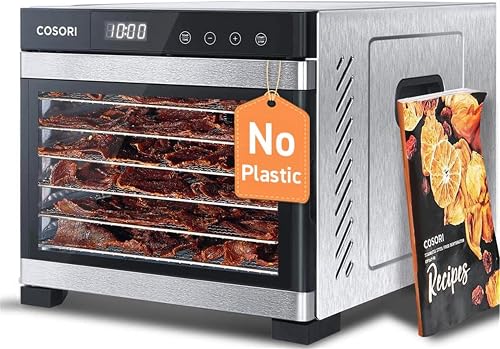
COSORI 6-Tray Stainless Steel Food Dehydrator
- 6 stainless steel trays; 6.5 sq ft of drying space, per the listing
- 600 W, rear-mounted fan
- 95°F to 165°F; timer up to 48 hours
- Mesh screen, fruit roll sheet and recipe book included
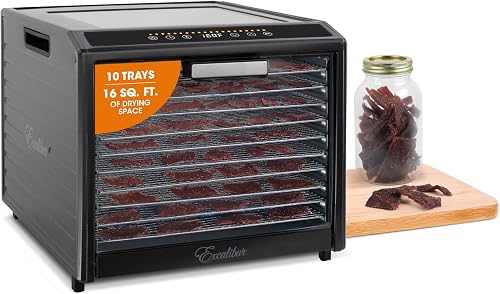
Excalibur Performance Series 10-Tray Food Dehydrator
- 10 stainless steel trays; 16 sq ft of drying space, per the listing
- Thermostat range 85°F to 165°F; timer up to 80 hours
- Horizontal airflow; no tray rotation needed, per Excalibur
- Glass door
Iowa State Extension notes Harvest Right machines are sold at several retail outlets. If you already own a Harvest Right, these silicone mats are sized for its medium trays, per the listing.
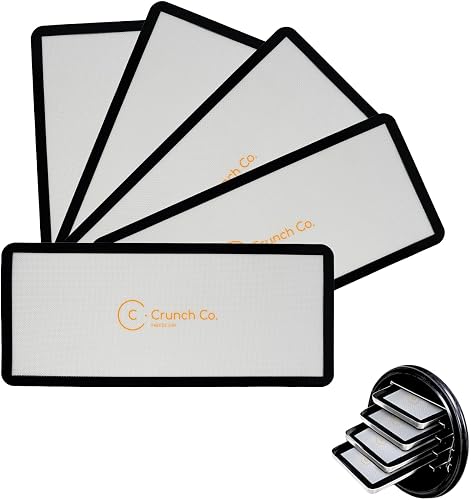
Crunch Co. Silicone Mats for Harvest Right Freeze Dryer (Medium)
- Sized for Harvest Right medium trays, per the listing
- Full tray set; non-stick silicone with fiberglass mesh
- Reusable; rinse or wipe clean
FAQ
Is freeze-dried better than dehydrated?
Closer to fresh and longer-keeping, per Extension, but with a higher initial investment and more energy use, per Utah State.
Does freeze-drying kill bacteria?
No.
Does it really last 25 years?
Unverified for home freeze-dried food. Plan on 5 years; Utah State suggests eating home product within 5 to 10 years. (Minnesota Extension says commercially prepared freeze-dried food can last up to 25 years.)
How long does dehydrated food last?
Plan on about 4 months; it's been known to last up to 1 year.
Sources
- Utah State Extension: Buying a home freeze-dryer
- Utah State Extension: Can I freeze-dry that?
- University of Minnesota Extension: Freeze-drying
- Iowa State Extension AnswerLine: Home freeze drying
- NCHFP: Packaging and storing dried foods
- Colorado State Extension: Drying fruits
- USDA FSIS: Jerky and food safety